

WEB ANALYTICS & PERFORMANCE METRICS

Start with the questions your website data should answer.

What do visitors need to do, and what would show that it happened? Connect your website goals with a clear measurement plan and a review of loading, interaction and layout behavior.

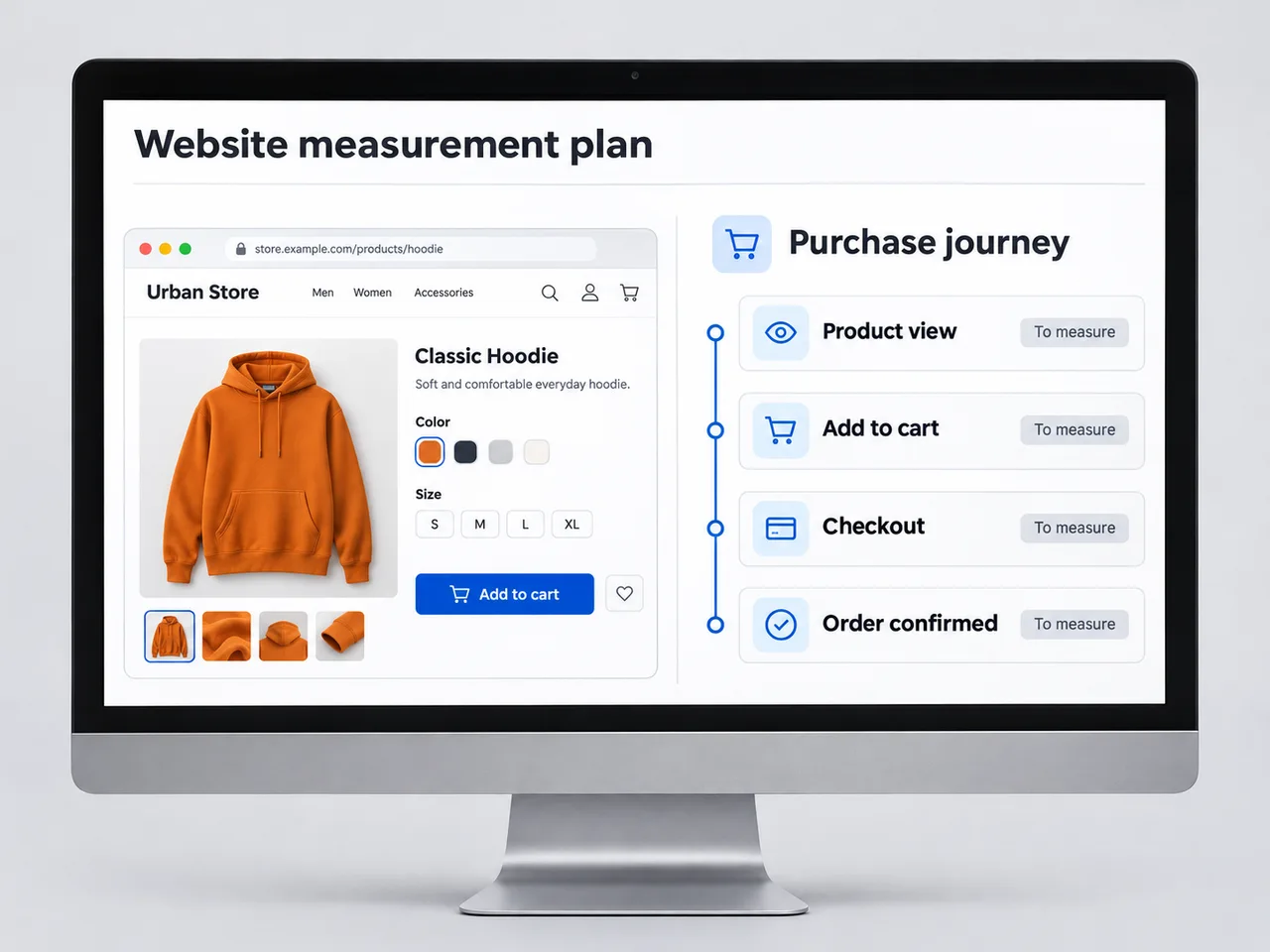
Illustrative product page preview beside a four-step visitor journey diagram without numeric performance results.

01 / ACTIONS AND EXPERIENCE

Define the signals before interpreting the results.

Plan how to observe important actions and how to review the website experience. Establish what each source can actually confirm.

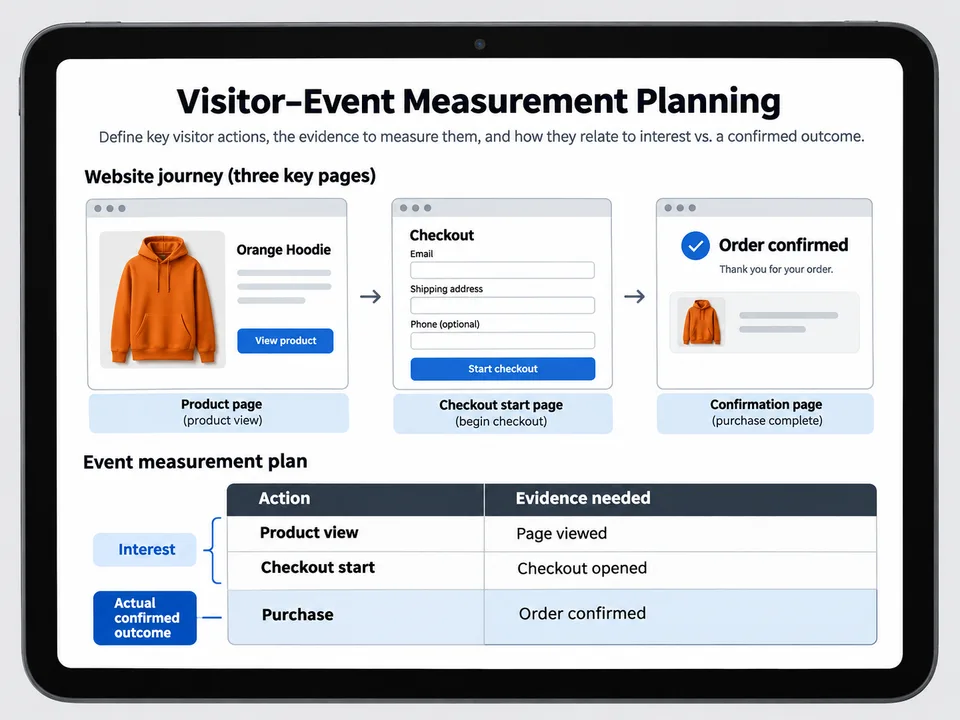
Illustrative measurement plan connecting a website page, a visitor event and a confirmed outcome.

Measurement plan & visitor journey

Map the pages and actions that matter, with a clear distinction between an expression of interest and a confirmed outcome.

  • Business questions and important visitor actions
  • Page, event and outcome definitions
  • Required sources and confirmation points
Discuss the measurement plan
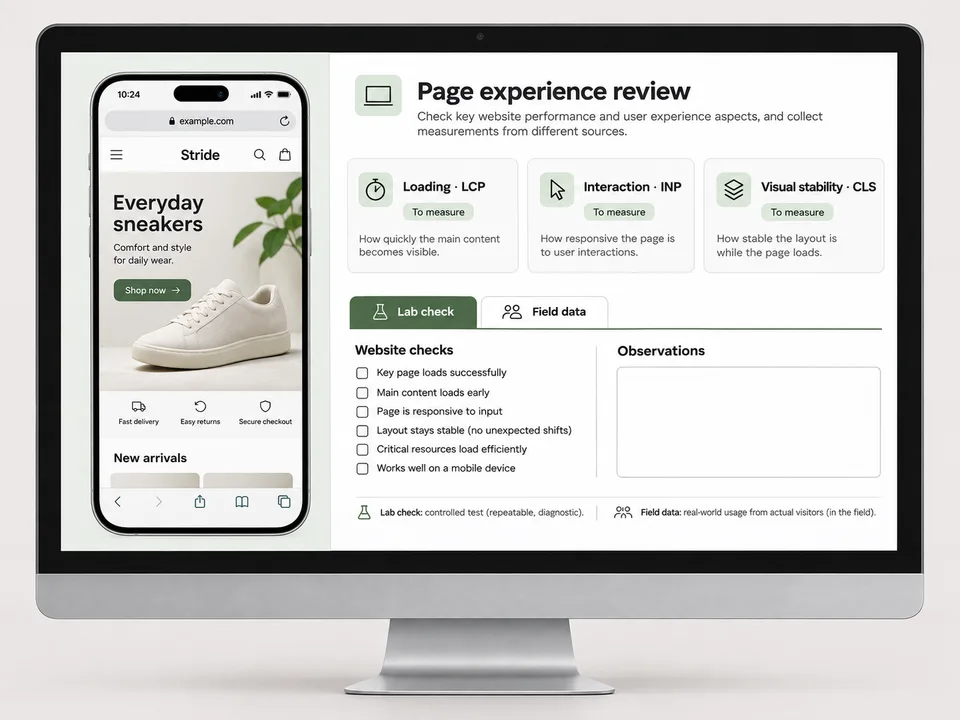
Illustrative loading, interactivity and visual stability review with items marked for measurement and no performance scores.

Performance & reporting review

Define a review of loading, interaction and visual stability alongside the reporting questions relevant to your site.

  • Pages and review conditions to define
  • Available evidence and measurement limitations
  • Findings, reporting needs and proposed next steps
Discuss the performance review

02 / QUESTIONS. SOURCES. INTERPRETATION.

Give each metric a purpose and a context.

Agree on what to observe, which sources are available and how the findings should be interpreted before adding tools or tracking.

  1. Define the objective

    Identify the business questions and the visitor journey. Choose the actions and outcomes worth reviewing, including what would count as confirmation.

  2. Review signals, sources and permissions

    Establish what data exists and which sources would be needed. Define authorized access, data-handling and consent requirements, then agree on any proposed measurement setup.

  3. Review and interpret

    Review the agreed evidence and distinguish observed behavior from assumptions. For performance, separate controlled laboratory checks from real-user field data when available, then discuss follow-up work.

The quote defines sources, checks, reporting and any implementation work. Existing accounts, visitor data or confirmed performance results are not assumed.

03 / BEFORE PLANNING MEASUREMENT

A few analytics questions.

What should I share to start?

Share the public website address, business questions and actions you want to understand. Describe available sources and aggregated summaries without sending credentials, personal records or private visitor-level data.

Does a button click count as a completed inquiry or order?

A click shows an interaction, not necessarily a completed outcome. An inquiry or order needs the relevant confirmation from the system that handles it. The plan defines those signals separately.

Do I need an existing analytics account?

Tell us what you already use, if anything. We can discuss the questions and source requirements first; provider selection, permissions and any new setup must be agreed before connecting tools.

How is website performance reviewed?

We define pages, conditions and the evidence available for loading, responsiveness to interactions and visual stability. Laboratory checks and field data reflect different conditions and must be interpreted in that context.

Does the service include tracking or ongoing reports?

Tracking implementation and recurring reporting are included only if agreed. The scope defines data sources, permissions, consent requirements, report questions and review responsibilities before implementation.

04 / START WITH THE QUESTION

What would you like to understand about your website?

Tell us which visitor actions and website experiences matter to your business. We can define what to measure and what evidence would be needed.